Steric reduces the sensory expression of smoke taint while preserving the desirable characteristics, structure and identity of the wine. Non-additive. No filtration. No waste stream.
Smoke Exposure Does Not Announce Itself at Harvest
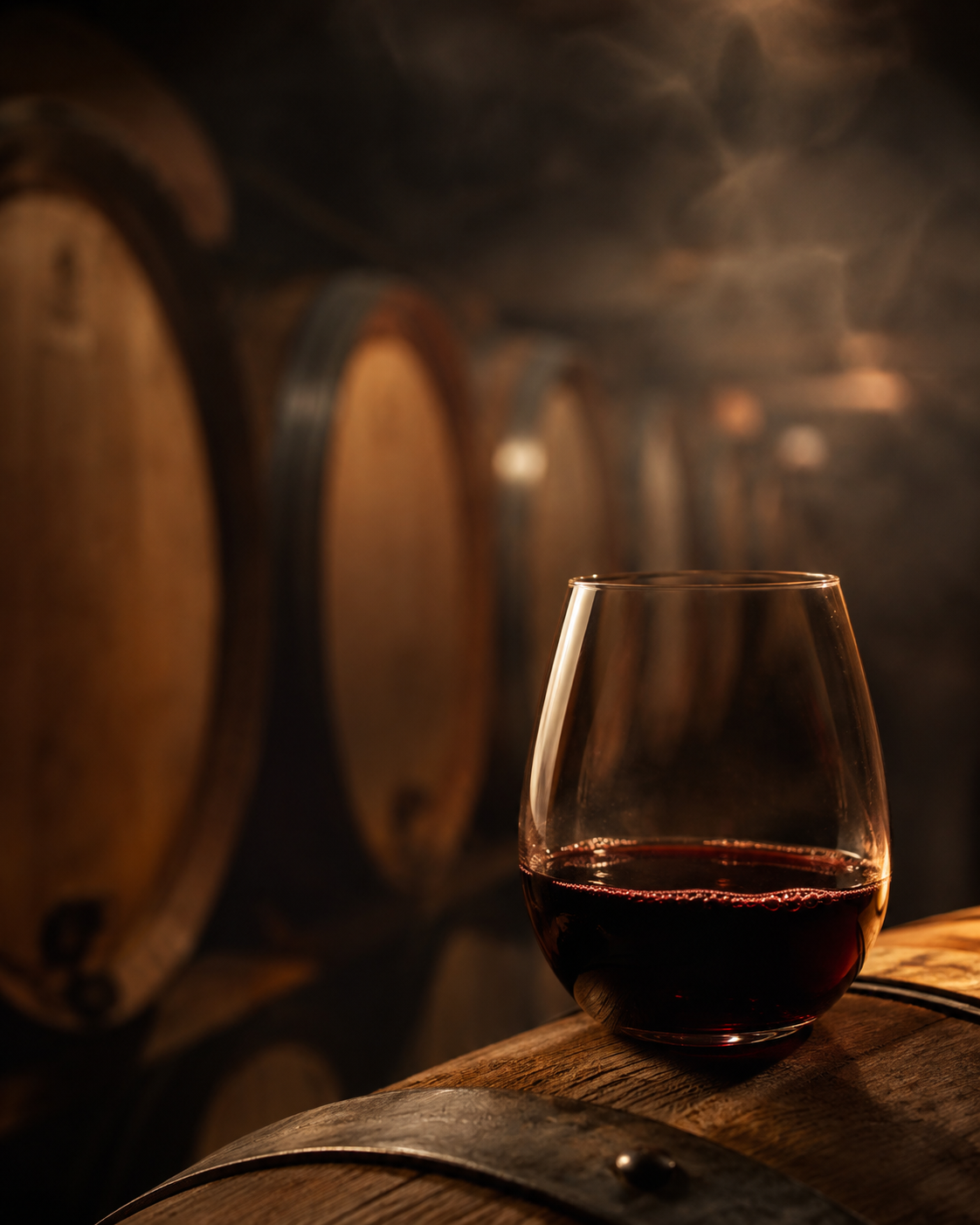
Wildfire smoke has become a persistent production and economic risk for wineries across the globe. Even when vineyards escape direct fire damage, exposure can introduce volatile phenols and their glycosides into grapes and wine, creating characteristics commonly described as smoky, ashy, burnt, medicinal or lingering on the finish.
Smoke impact may not be fully apparent at harvest or during early fermentation. Bound precursors can contribute to sensory effects later in production, leaving significant investment tied up in wine that may no longer meet brand standards.
Steric is a fundamentally different remediation tool.
Recover Value From Wine You Have Already Produced
Consider a hypothetical 20,000-gallon lot that cannot be bottled under its intended label because of perceptible smoke taint. At approximately five 750ml bottles per gallon, that is roughly 100,000 bottles of potentially impaired inventory.
Back to intended format
A wine that moves from unacceptable to commercially viable can potentially return to its intended format.
Suitable for blending
A severely impacted wine that becomes suitable for blending may recover considerably more value than bulk disposal.
Premium retained
A premium wine that retains its varietal and brand characteristics after remediation can represent an even larger recovery opportunity.
Even a modest difference between the wine’s intended value and its downgraded or bulk-market value can represent hundreds of thousands of dollars in lost revenue or inventory value.
Change the Expression, Not the Wine
Steric is a non-additive processing technology designed to modify the sensory expression and integration of compounds within a finished beverage. Rather than filtering compounds out or masking them, it uses precisely controlled electromagnetic processing to alter molecular interactions within the wine matrix.
Non-Additive Processing
No fining agents, flavor compounds, masking agents or other materials are added to the wine.
No Filtration or Separation
The process does not depend on physically removing compounds. Aggressive separation can take desirable components along with undesirable ones.
Preserve Wine Character
Processing can be calibrated to improve integration while maintaining varietal expression, aroma, mouthfeel, structure and the winemaker’s intended style.
Scalable to Commercial Volumes
Once parameters are established through trials, the process applies to commercial volumes with no reformulation and no fundamental change to existing practices.
Steric reduces the sensory expression of smoke taint. It does not remove the compounds from the wine.
Smoke Taint Is Not Simply a Winemaking Problem
It is an inventory and margin problem. Nearly all of the cost is already spent by the time the wine is judged.
A winery may have already incurred nearly all of the costs associated with farming, harvesting, fermentation, cellar operations, barrels, labor and aging before determining that a wine cannot meet its intended sensory standard.
Downgrade the wine. Blend it into lower-value production. Undertake extensive remediation. Sell it into the bulk market. Write off some or all of its value.
Steric creates another potential path.
No Capital Investment
Steric operates a no-upfront-capital processing model. Producers use the technology without purchasing equipment, paying instead on the volume of product processed — a variable operating expense tied directly to production.
Supported production volumes, from
And higher, at commercial scale
Upfront capital commitment
Waste stream from processing
Producers can begin with trials and scale seamlessly into full commercial production without an upfront capital commitment.
The First Step Is Not a Major Production Commitment
For wineries facing smoke-affected inventory, it is a controlled trial run on their own wine.
Provide Representative Wine
Send Steric representative smoke-impacted wine from the affected lot.
Establish an Untreated Control
Retain untreated wine as the reference against which every treatment is judged.
Process Multiple Treatment Variations
Representative samples are processed at different Steric parameters to find the treatment that suits the wine.
Let the Winemaking Team Decide
Your team determines whether the sensory and economic improvement warrants commercial-scale processing.
Scale Into Production
Established parameters carry into full commercial production, with no reformulation of the wine.

Two Ways to Process
At Your Facility
Steric systems are deployed at customer facilities, designed to support production volumes from approximately 500 gallons per hour to 1,500 gallons per hour or more.
Through Steric-Supported Operations
Product can be processed through Steric-supported operations at co-packers and bottlers, with no equipment purchase on your side.
Customers pay based on the volume of product processed, so cost tracks production rather than capital.
A New Tool for an Increasingly Important Winemaking Problem
Steric is not intended to replace vineyard management, smoke exposure testing, laboratory analysis, blending or the judgment of the winemaker. It adds another tool when those measures cannot prevent smoke exposure from affecting finished wine.
The technology is particularly suited to remediation because the Steric Process is non-additive, scalable, produces no waste stream and is designed to preserve the underlying identity of the wine.
Provide representative smoke-impacted wine and an untreated control. We will process multiple treatment variations and let your winemaking team judge the result.